


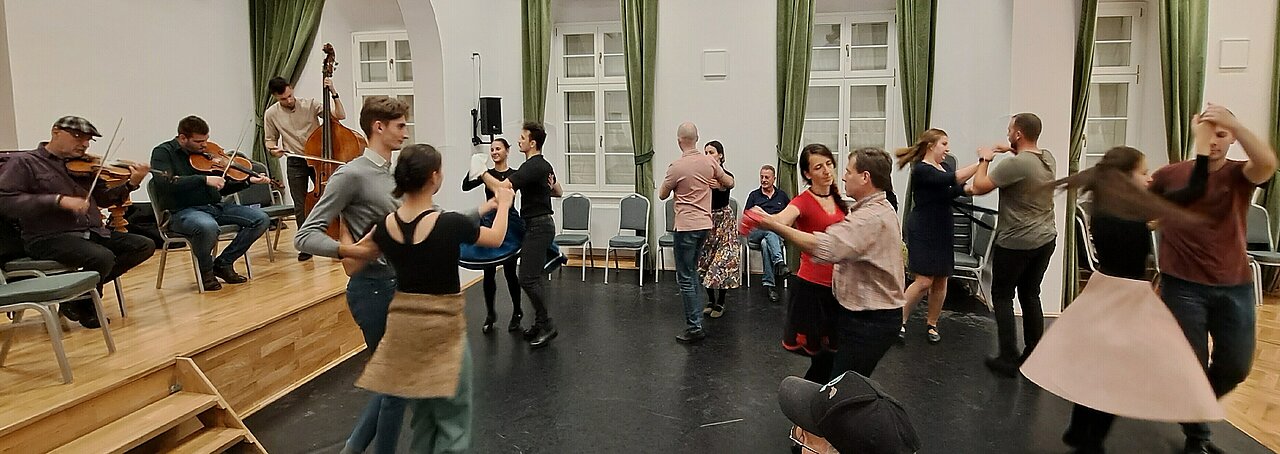

The members of the band are:
Czerán Csaba"Jack" - flute, kaval, tilinka, viola
Görög István - drums, percussion
Kovács Sándor - coboz, flute, violin
Kásler Magda - vocals (singer of Maros Art Ensemble)
We usually have invited guests:
Sinkó András -violin
Koszorús Kálmán -cimbalom,drums
Sepsi Béla -violin
Gábor Ferenc -violin
The ÖVES ensemble has been interpreting and promoting the collection of Moldavian and Transylvanian flute and string folk music for 17 years. The name of our ensemble comes from the circular dance called "Öves" of the Moldavian Csángó.
Our aim is not only to entertain the audience, but also to raise their awareness of our cultural values. We try to participate in activities that serve this purpose. The most successful events have been those where our musicians and singers have joined in with the audience in the dances.
We have performed at several Csángó festivals, city day events, Pusztinai-days, but we have also been invited to perform at the Tusványos Summer University, Újbudai Days in Budapest, Budapest Dance House Meetings, Tanzhausfest in Leipzig, Hídivásár in Szeged, and as an invited guest at Gyimesközéplok, Outer-Rekecsin and Jobbágytelk Dance Camps, Csűrszinháza Days, Balatonkenese and Baja Csángó Camps, Balatonkenese Balkan Camps, Rudolstadt Festival, one of the biggest folk festivals in Germany, and many more cultural events. We also took part in a two-week tour of Sweden.
In Târgu Mureș we play music and teach in children's and adult dance classes on a weekly basis. Our ensemble tries to restore the original sound and style of vocal and instrumental folk music and to keep its function.The music of our ensemble faithfully reflects the influence of the folk music of other ethnic groups (Romanian, German, Jewish and Gypsy) living in the neighbourhood of the Csángómagyar people. One of the basic conditions for the existence of folk music is the reception, transformation and assimilation of melodies from outside the community. This process took place over a much longer period of time and it was then that valuable, stylistic, functional and father-to-son folk music was created. Nowadays, as the traditional peasant way of life is rapidly disintegrating, the village community can only do a poor imitation of the highly influential urban music.


